
Types of Refractive Errors
We provide custom LASIK and other vision correction procedures tailored to your unique prescription and lifestyle. Whether you're nearsighted, farsighted, or have astigmatism, our Phoenix, West Valley, Scottsdale and Goodyear LASIK specialists are here to help determine the best solution for you.

Nearsightedness (Myopia)
Myopia is when light from a distance object comes to focus in front of the retina and as a result objects at a distance are blurred while close objects are clear.

Farsightedness (Hyperopia)
Hyperopia is when light from a distant object comes to a focus behind the retina and as a result objects that are near might be blurred and objects at a distance are clear.

Astigmatism
Astigmatism is a refractive error when light rays entering the eye don’t focus on a single point, but two points, leading to blurred vision at distance and near.
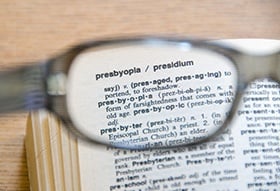
Presbyopia
Presbyopia is a condition that affects the lens inside the eye. As we age, the lens gradually loses its flexibility which makes it difficult to see close objects like books, smart phones or computers. This is a normal part of the aging process which is why people need reading glasses as they age. This typically affects people over the age of 40.